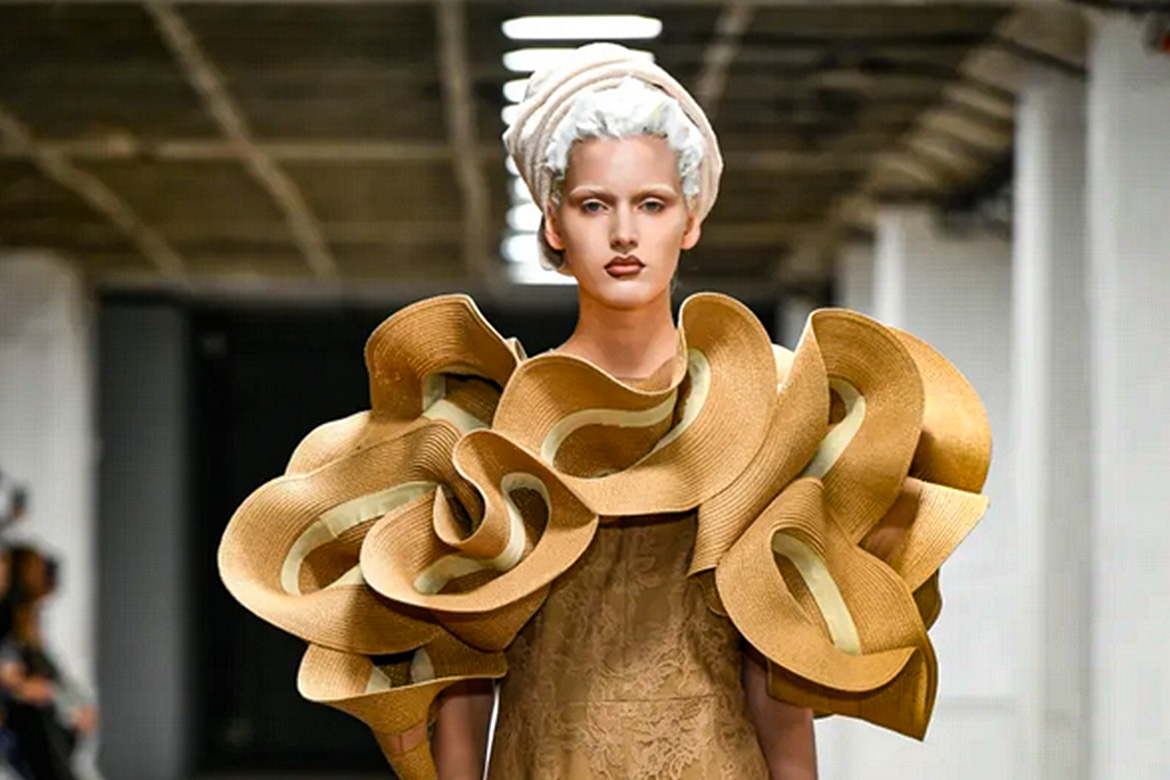
Where Baroque Drama Meets Street Disruption SS2026
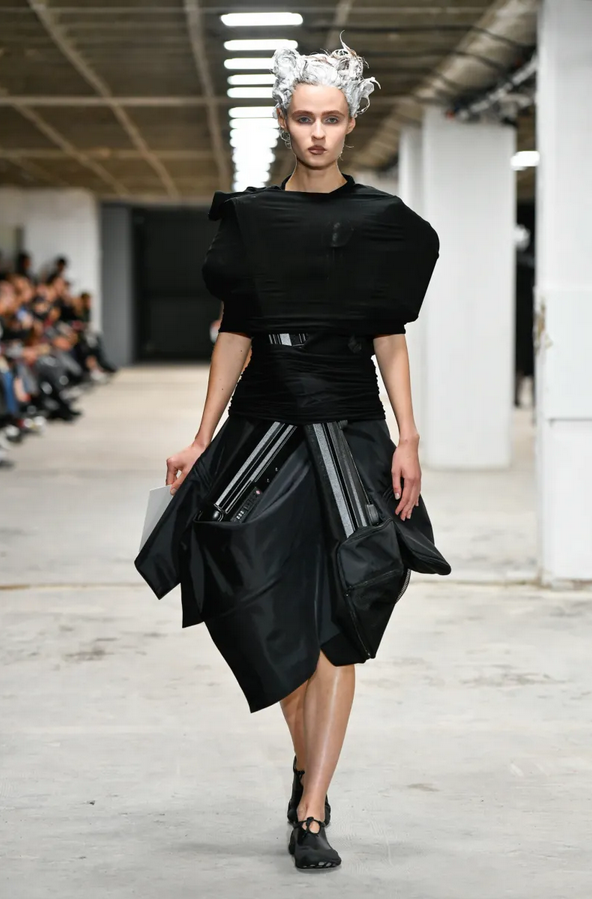
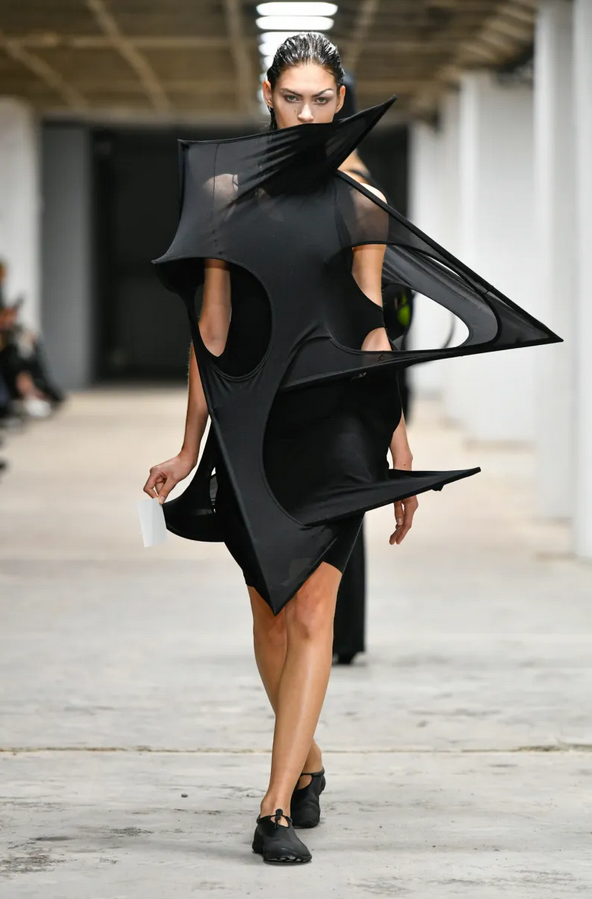
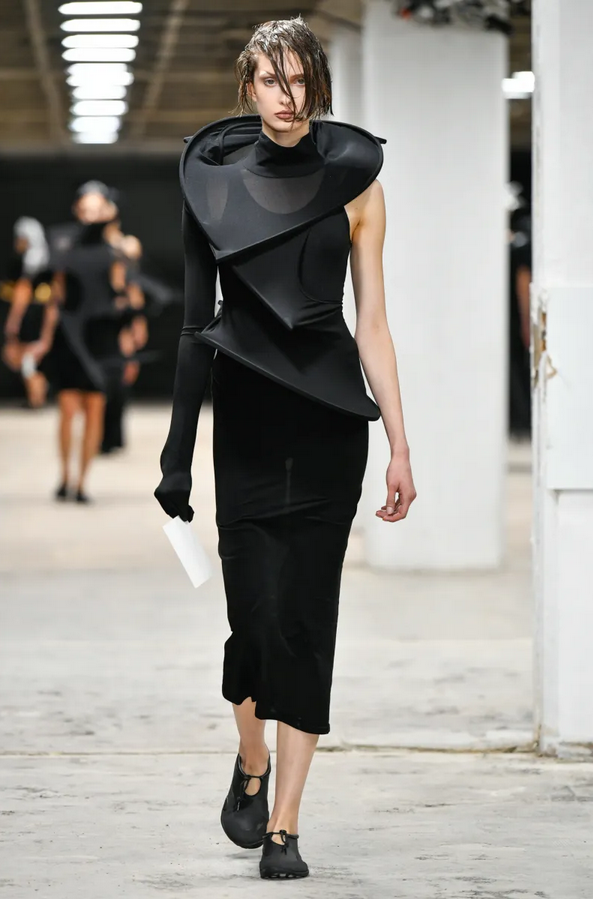
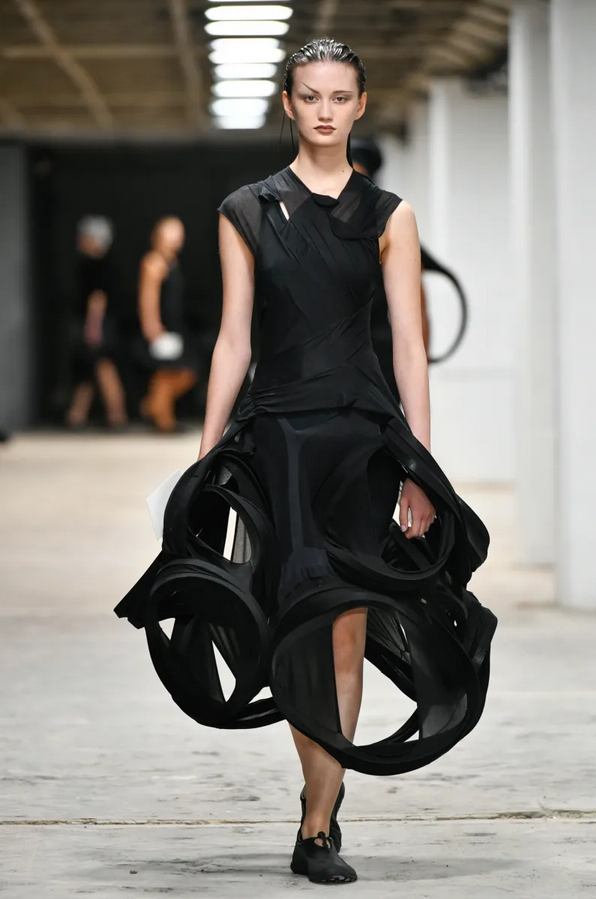
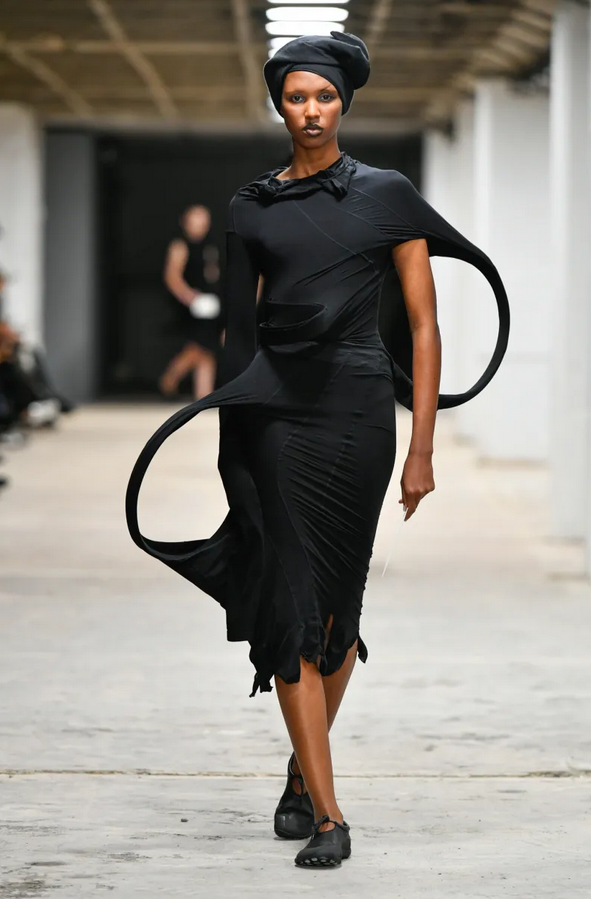
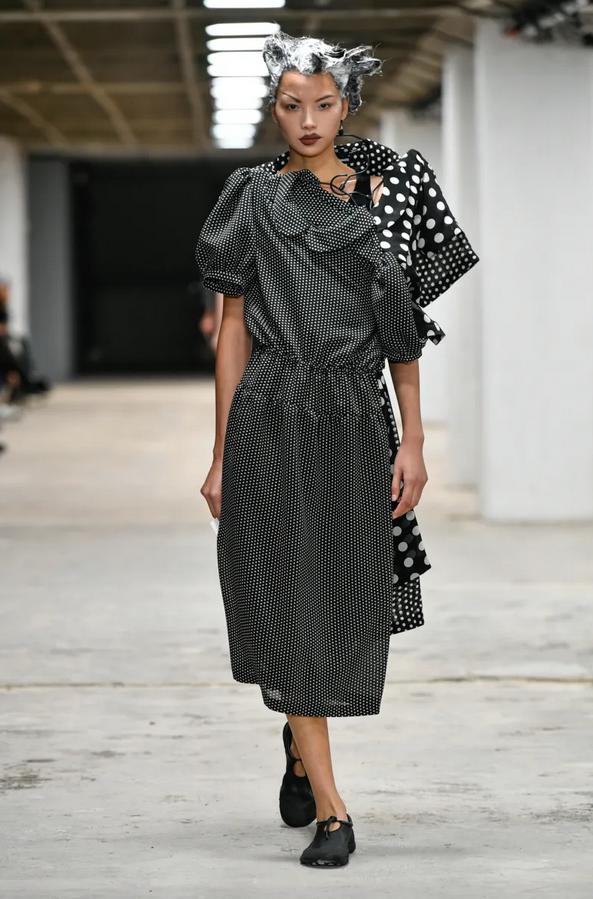
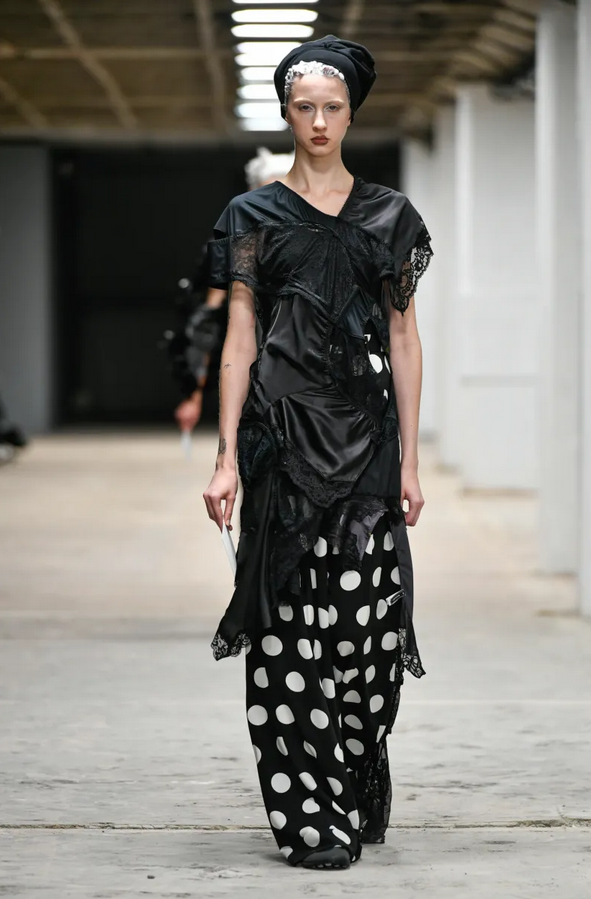
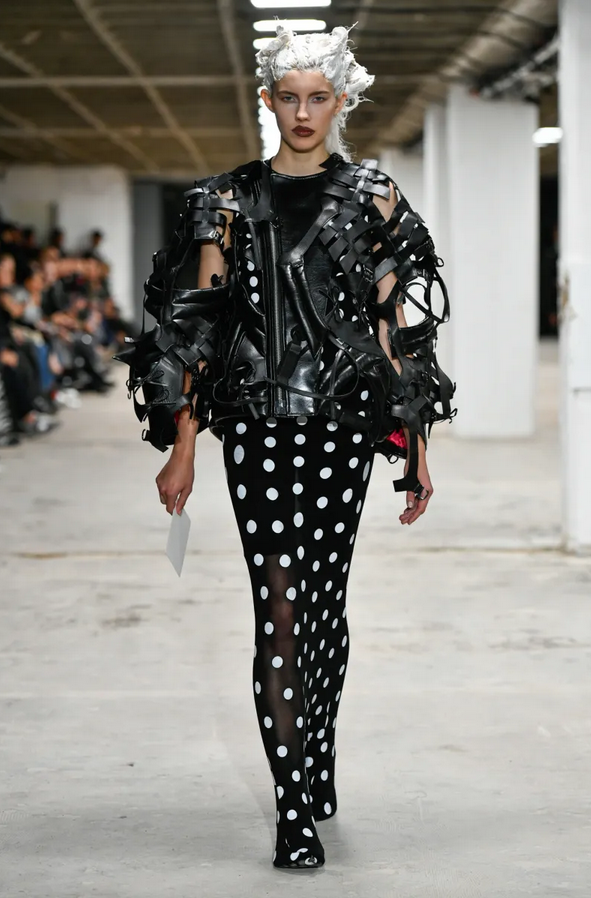
Junya Watanabe’s Spring/Summer 2026 collection at Paris Fashion Week blends rococo textures, deconstructed tailoring, unexpected materials, and art-history motifs, revealing a daring vision that reimagines classic and streetwear aesthetics.
Designer Profile & Context
Junya Watanabe is a Japanese designer noted for his deconstructive approach to tailoring and his unique blending of traditional craftsmanship with avant-garde sensibilities. He’s long been associated with artistry, texture, and a willingness to disrupt conventional fashion norms. His work often emphasizes layers, patchwork, experimental silhouette play, and the mixing of streetwear influences with more formal aesthetics.
In SS26, Watanabe continues to push these boundaries. The collection was shown as part of the Paris Fashion Week Men’s Spring/Summer 2026 season, where he delivered looks that simultaneously evoke heritage and rebellion, elegance and disruption.
Themes & Concept
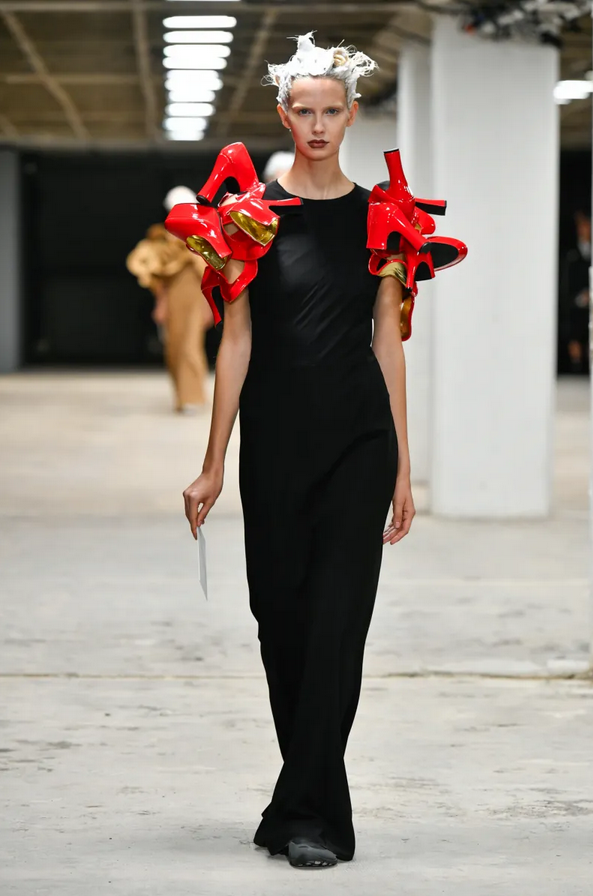
Junya Watanabe’s SS26 collection seems rooted in the idea of reimagining opulence through imperfection. He draws from historical art movements (notably rococo and baroque) to inform motifs, prints, and textures, but doesn’t allow them to remain static. Instead, he fractures, patches, overlaps, and deconstructs.
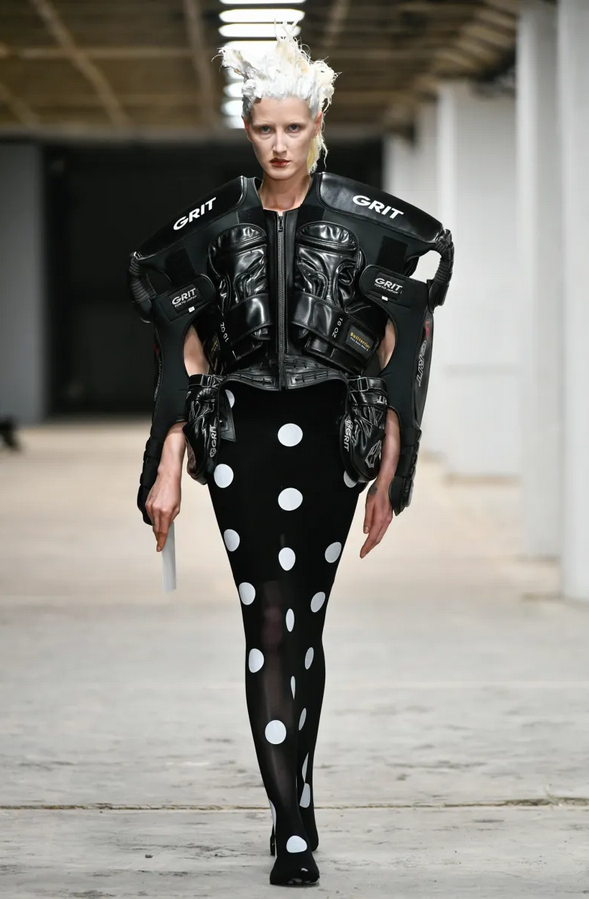
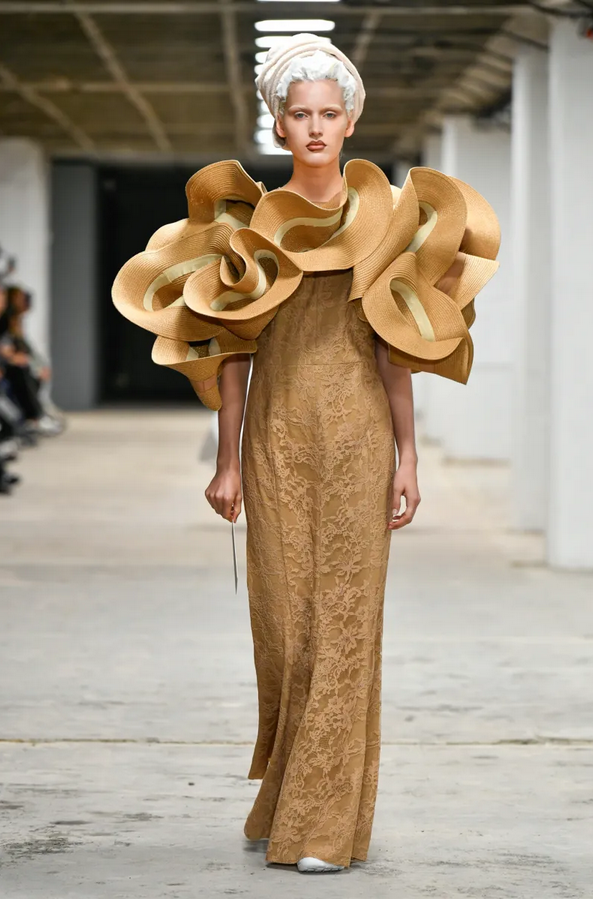
The runway show alternated between structured, sharply tailored pieces and more experimental, almost theatrical moments. Watanabe used materials in unexpected ways—combining delicate fabrics and ornate textures with heavy, distressed denim, hardware, and rough finishing. The tension between luxury detail and streetwise edge feels intentional, creating an aesthetic that’s luxurious but restless.
Materials, Textures & Palette
Color Palette
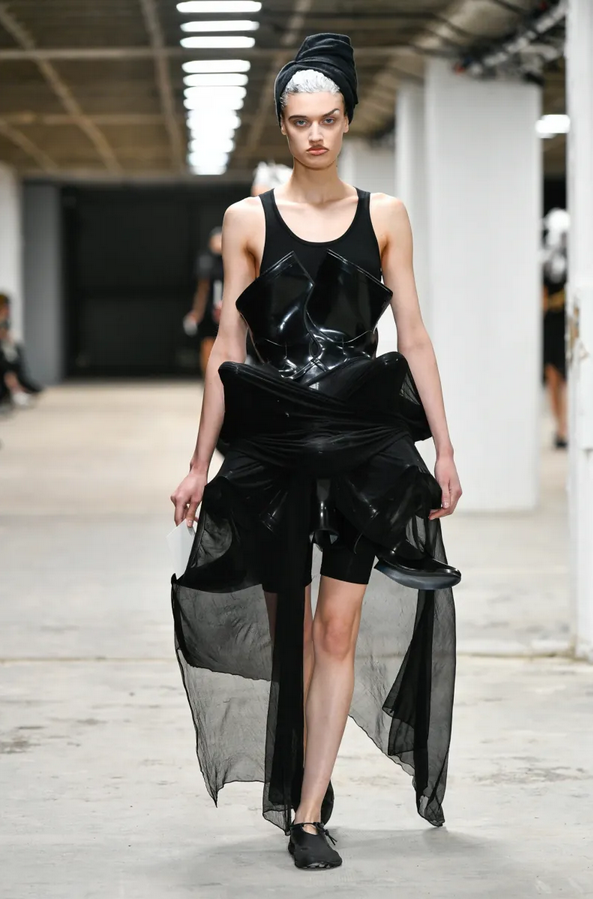
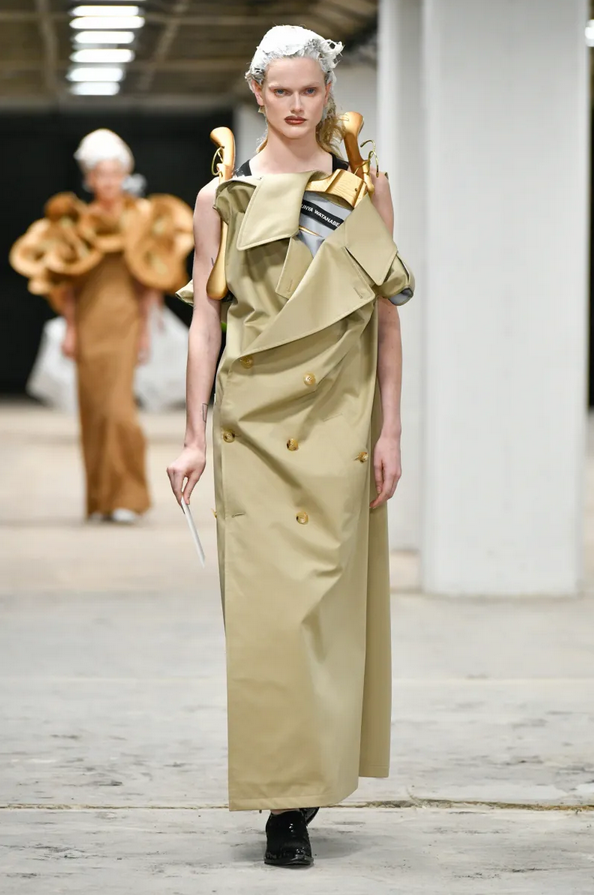
The color story is bold yet historic: muted neutrals like beiges and creams, contrasted by deep tones — reminiscent of old masters’ paintings: rich blacks, deep reds, gold accents. Watanabe plays with color to highlight contrast — the ornate versus the raw.
Fabrics & Textural Details
- Jacquards & brocades: ornate fabrics with rich textures and complex patterns feature in jackets and blazers.
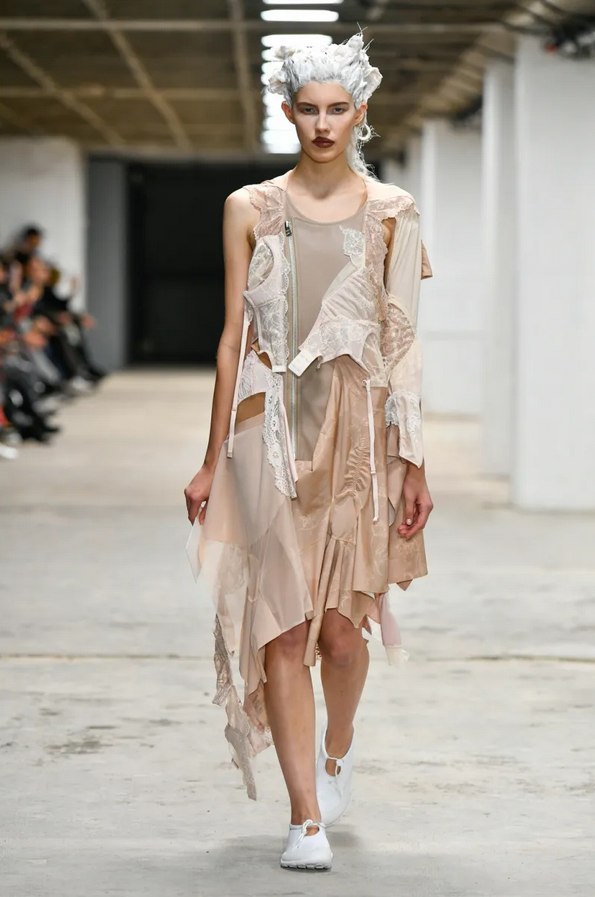
- Distressed denim and patchwork: denim is used not just as a foundational fabric but deconstructed, stitched, worn. Patchwork adds visual complexity.
- Sheers, overlays & delicate fabrics: these contrast sharply with heavier pieces. Overlays are used to create depth and dimension.
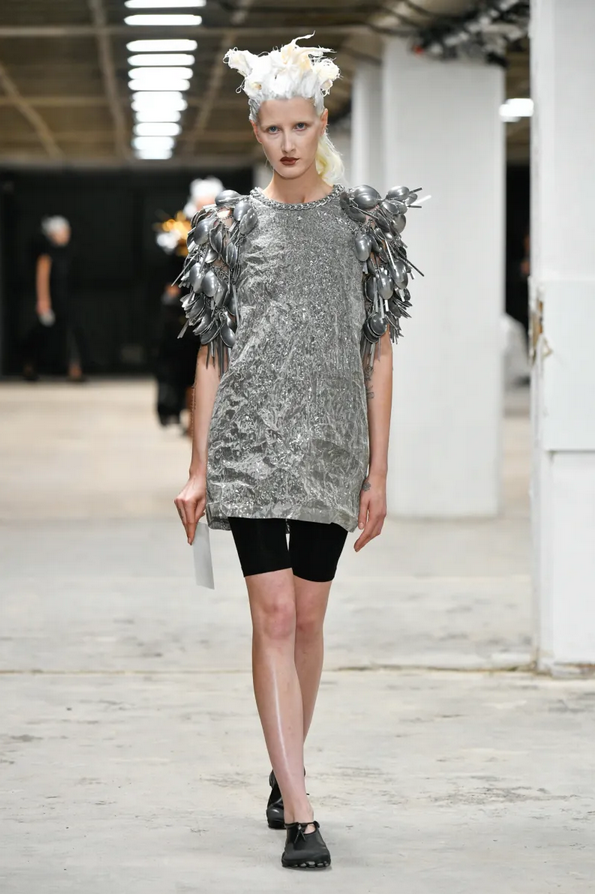
- Unexpected materials & accessories: Watanabe introduces elements like utensils as decoration (forks, spoons), everyday objects reimagined into couture statements.
Silhouettes & Standout Looks
Tailoring & Structure
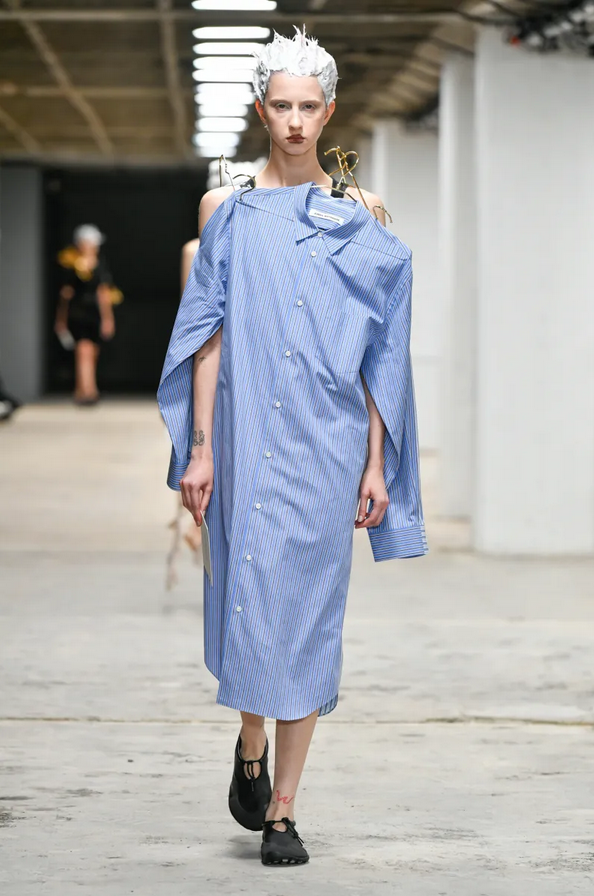
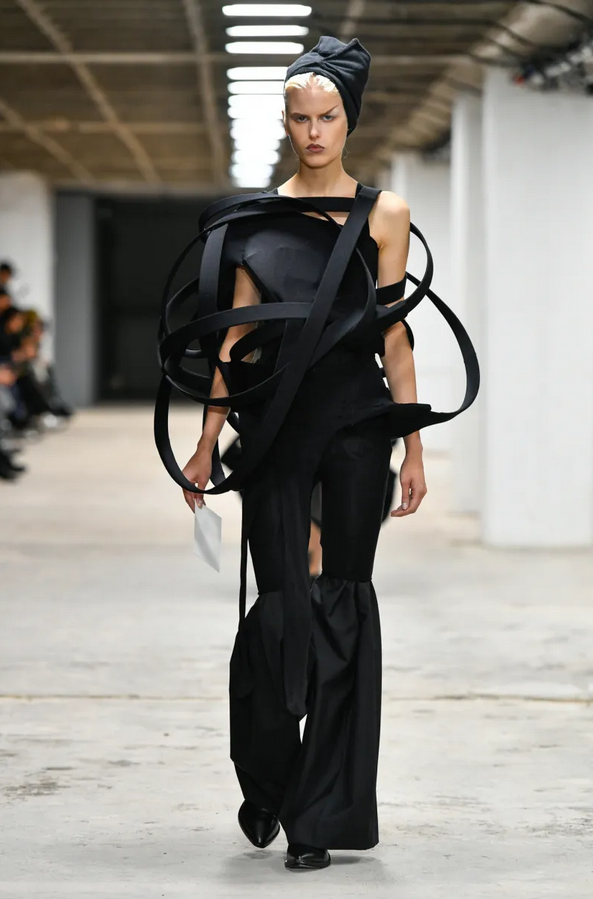
Some of the most compelling pieces are sharply tailored blazers and coats with strong lines, but Watanabe twists them — asymmetric hems, exaggerated shoulders, merged pieces (e.g., coats welded together, shirts conjoined). He plays with proportion and merging of shapes.
Deconstruction & Objectification
The runway offers looks that feel like artworks: dresses made from two trench coats welded together, office shirts elongated past typical lengths, even decorative elements like clustered boots used as adornments on shoulder pads. These decisions reflect Watanabe’s interest in turning ordinary or utilitarian items into art.
Cultural & Narrative Motifs
Art history pops up: rococo swirls, baroque motifs in prints, jacquards reminiscent of antique wallpapers. Watanabe’s “controlled wardrobe chaos” uses these motifs but disassembles them — maybe a flourish here, a torn edge there — so that heritage is present but made dynamic.
Strengths & Potential Limitations
What Impresses
- Creative risk-taking: Watanabe doesn’t settle for safe aesthetics. Every look has something unexpected.
- Craftsmanship and detail: The blends of high embroidery, jacquards, and raw finishing communicate technical skill.
- Narrative coherence: Though chaotic, the collection maintains a sense of story — heritage vs disruption, opulence vs everyday grit.
- Wearable art: Some pieces feel theatrical, but there are also more grounded options that could be translated into street style or elevated wardrobes.
Potential Weaknesses
- The theatrical nature might limit mass commercial appeal; some designs may be more suited for editorials than everyday wear.
- Deconstruction can reduce durability or ease of wear.
- The boldness and density of detailing may overwhelm if not styled carefully.
Conclusion
Junya Watanabe’s SS26 collection at Paris Fashion Week is a powerful exploration of contrast — between past and future, ornament and abrasion, tradition and disruption. It strikes a balance between spectacle and craftsmanship, making bold statements while still honoring fabric, form, and history.
For fashion lovers, this collection is a reminder that beauty often lies in imperfection, that familiar shapes can become radical statements, and that the runway remains a place where identity, history, and vision converge.