Milan Fashion Week — Crafting Disorder as Luxury
Explore Tokyo James’ Spring/Summer 2026 “Chaos” collection at Milan Fashion Week: raw edges, deconstructed leather, handwoven detailing, cultural expression and boundary-pushing fashion.
Introduction & Designer Profile
Tokyo James is a British-Nigerian designer known for merging African heritage with avant-garde tailoring and bold material experiments. Vogue describes his aesthetic as embracing “rough edges” over polish — favoring imperfection, texture, and artisanal craft.
Born and raised in London with roots in Nigeria, James centers his work on identity, juxtaposition, and narrative. His collections frequently combine traditional West African textiles, bold prints, and innovative structural cuts. In his SS26 collection, he continues his independent trajectory — creating fashion that is raw, expressive, and unafraid to disrupt expectations.
Collection Overview: “Chaos”
The Tokyo James SS26 collection, presented during Milan Fashion Week, is titled “Chaos” — a deliberate embrace of disorder as creative energy.
James frames chaos not as a flaw but a catalyst for originality. He explained backstage that he aimed for the collection to be “artistic but wearable”: garments that provoke, that move, that wear the mark of human touch.
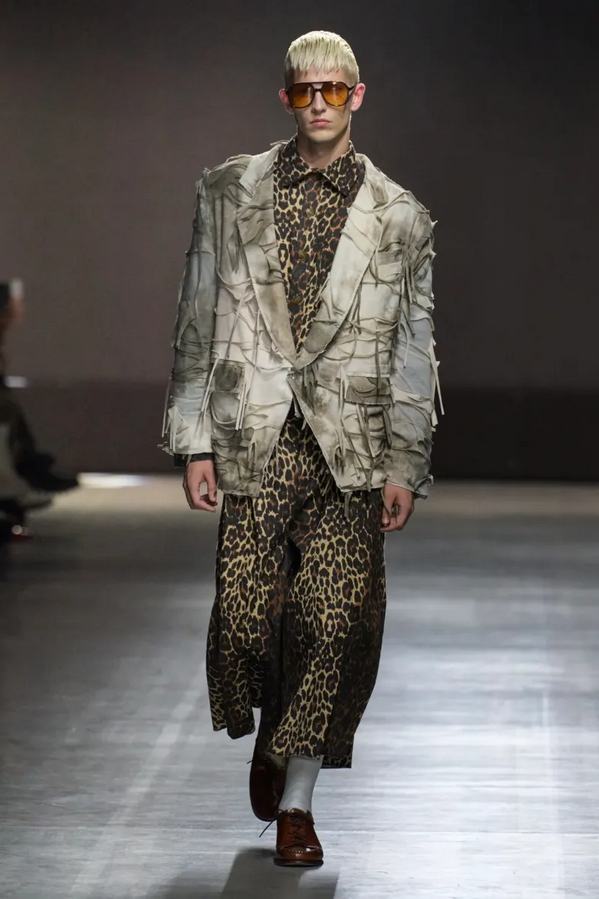
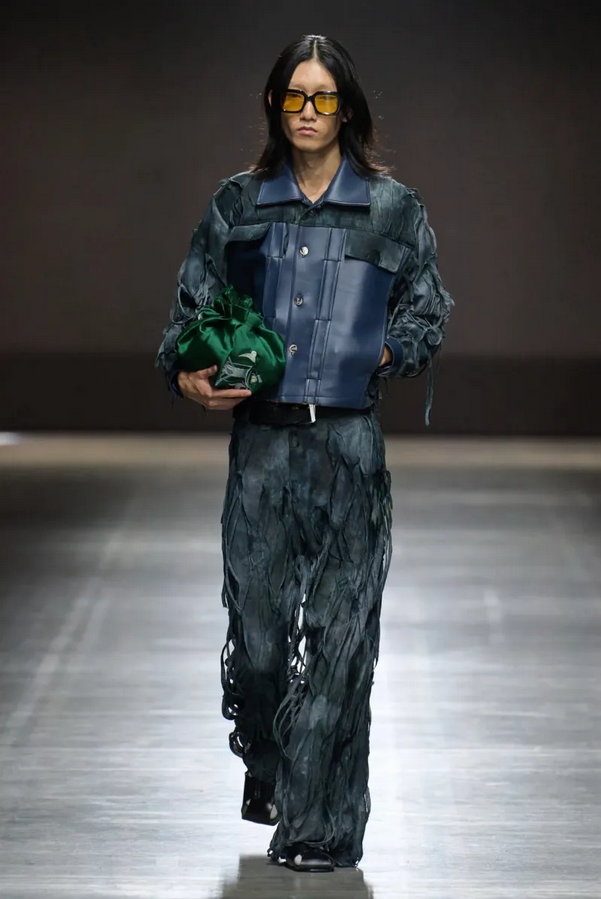
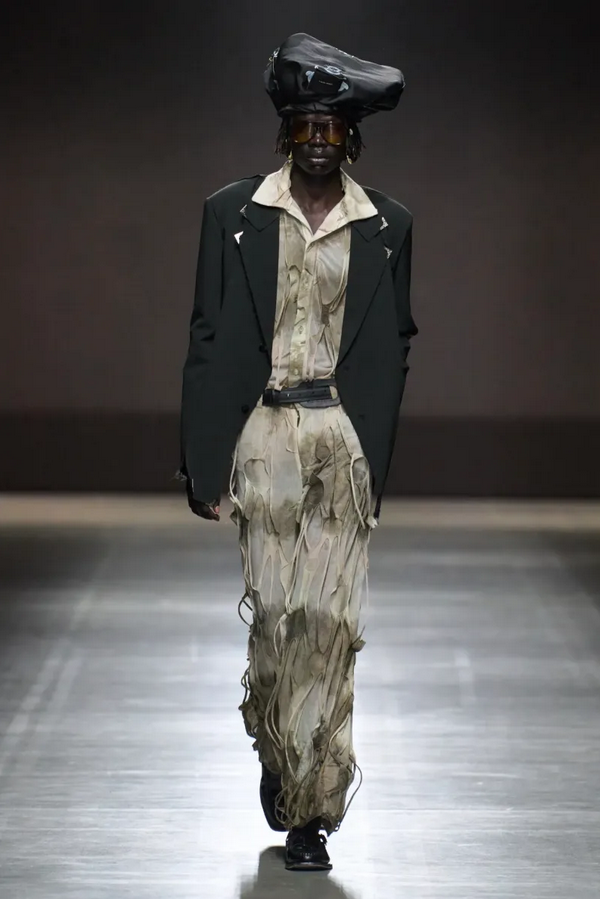
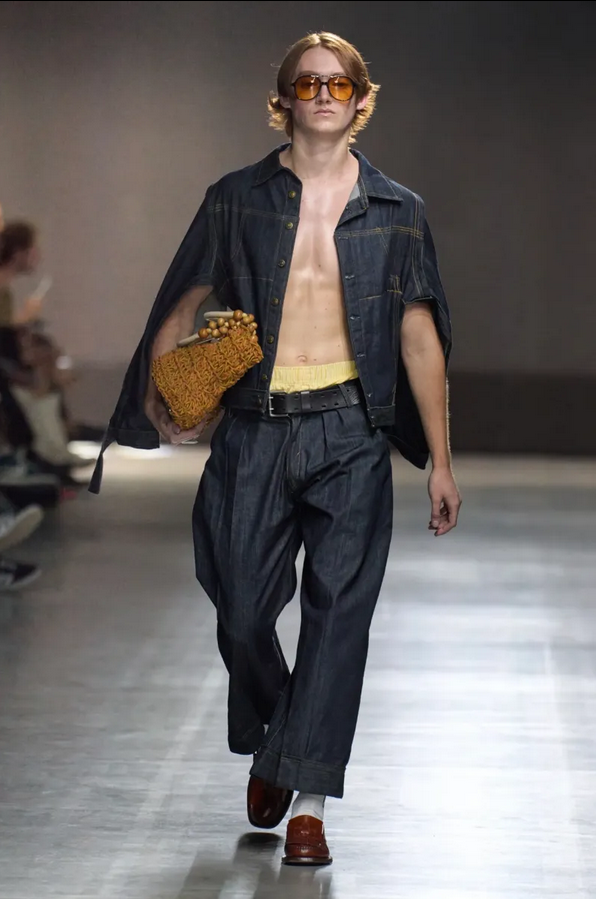
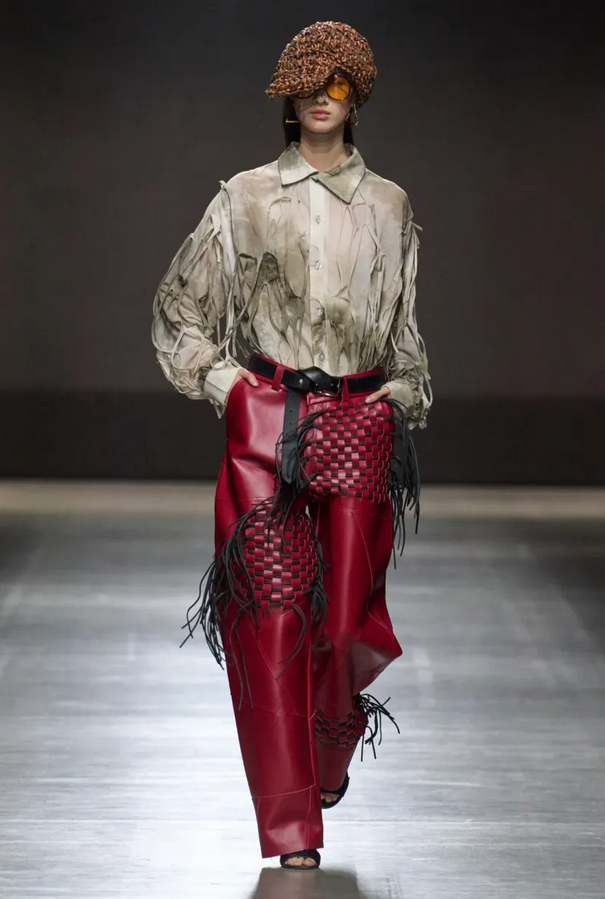
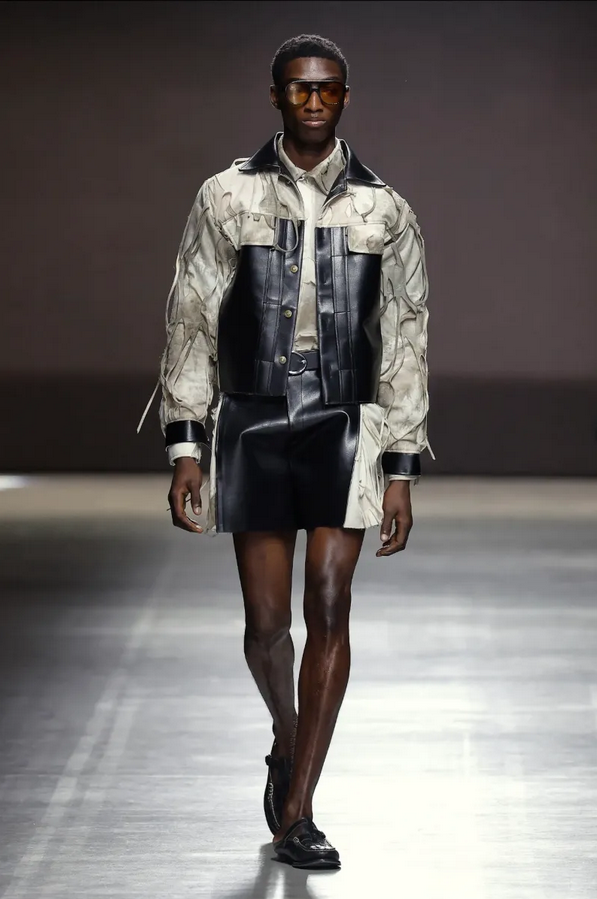
This ethos is evident in pieces that feel unfinished, torn, remade; leather deconstructed and reconstructed; fabrics cut into layers and re-stitched; handwoven leather accessories and crochet elements.
Palette, Materials & Technique
Color Palette
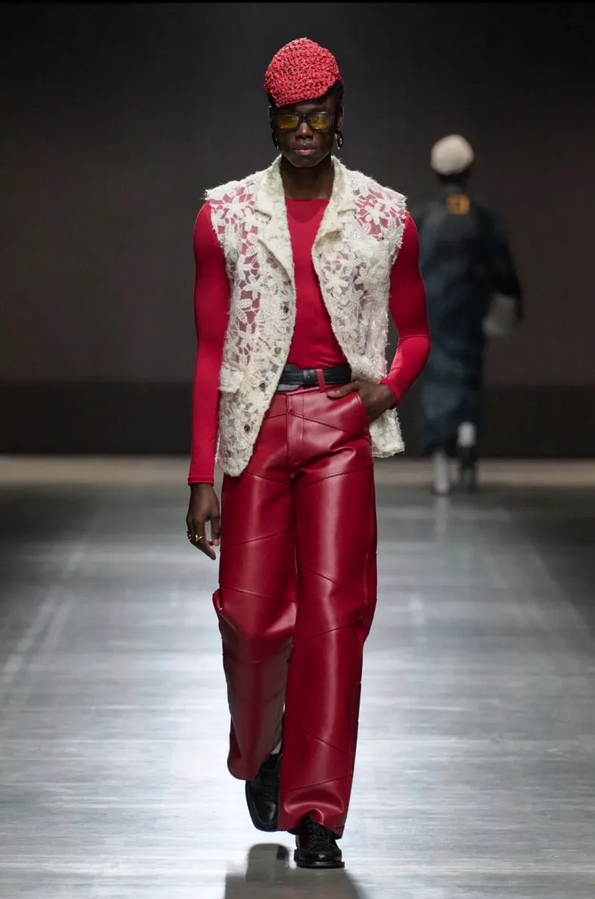
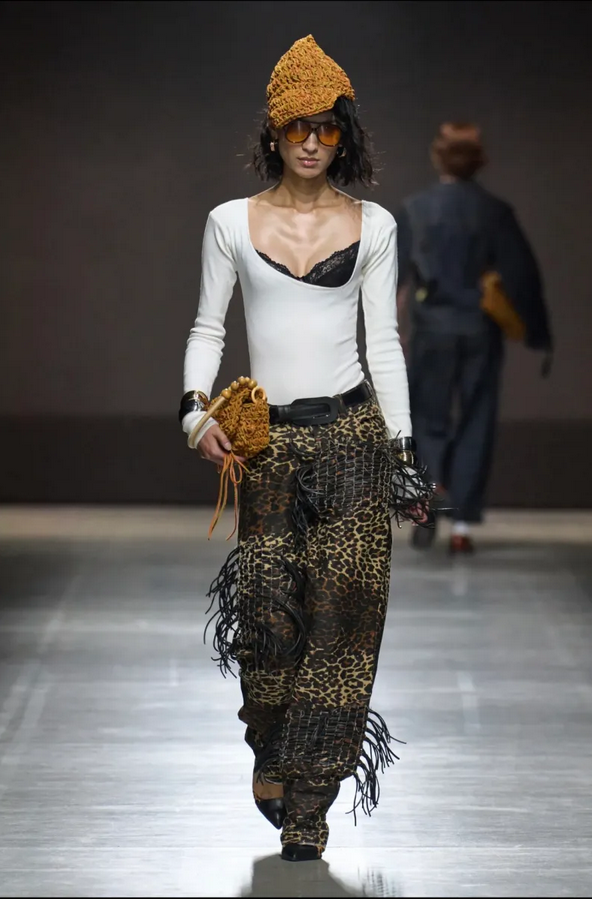
The color story leans into contrast: muted off-whites, gray-greens, leaning toward black, burnt orange, red and leopard print accents. The palette supports the tension between calm and disruption.
Materials & Textures
James leans heavily into fabric experimentation:
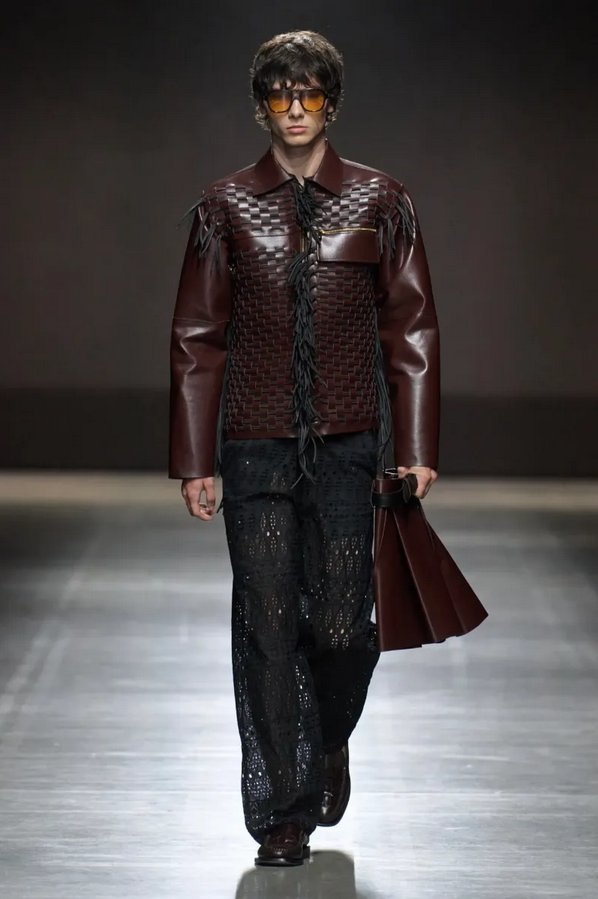
- Leather (especially soft or distressed) is deconstructed and reassembled in architectural ways.
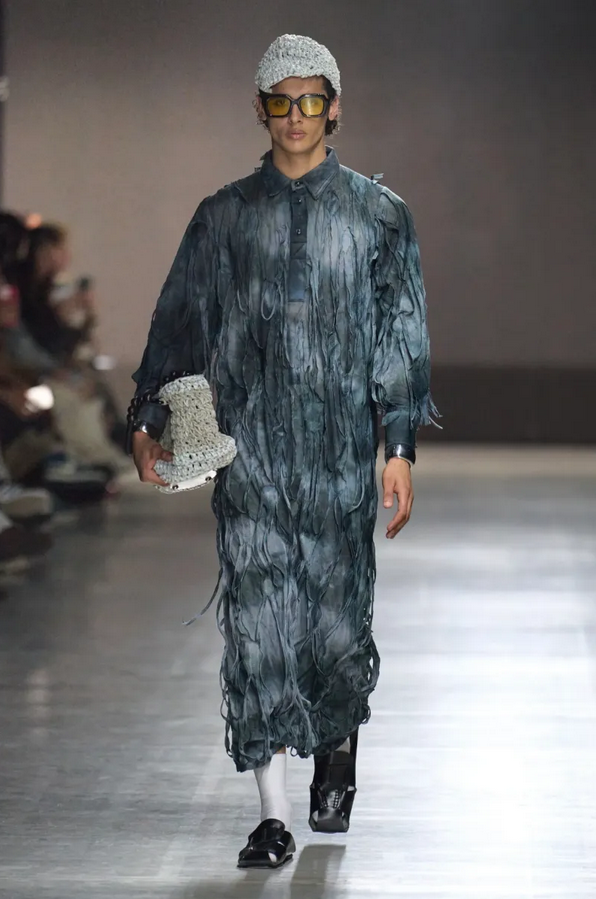
- Garment-dyed jerseys, often in layered cuts that are then torn, creating textural roughness.
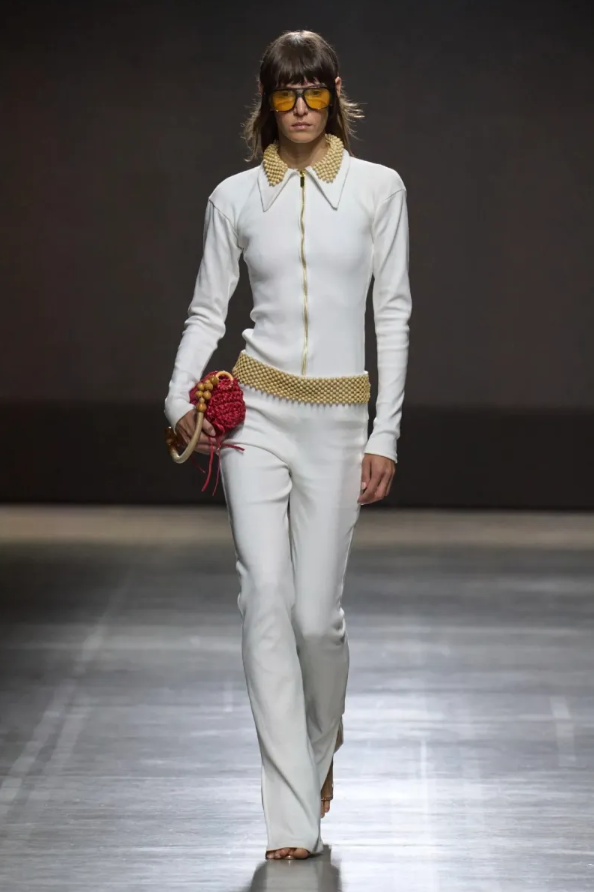
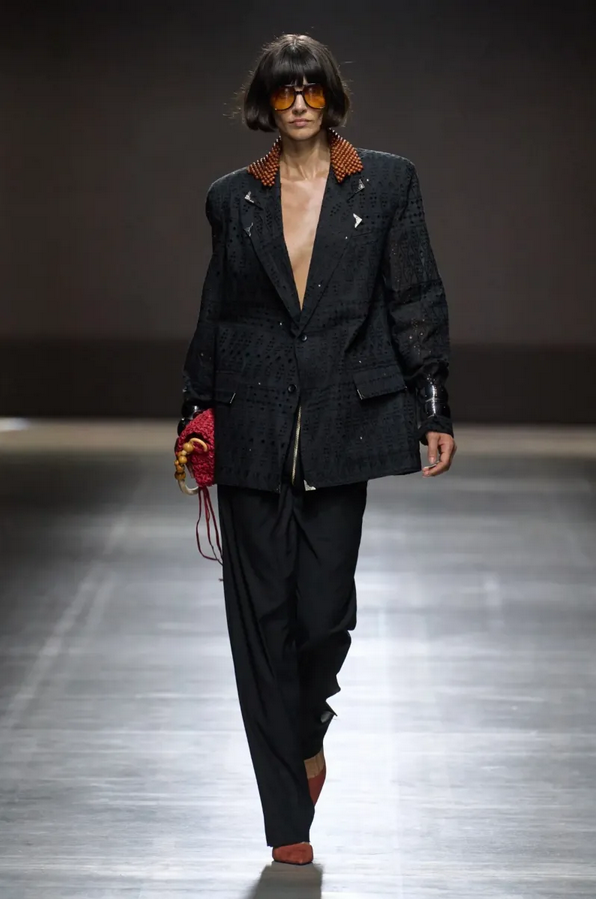
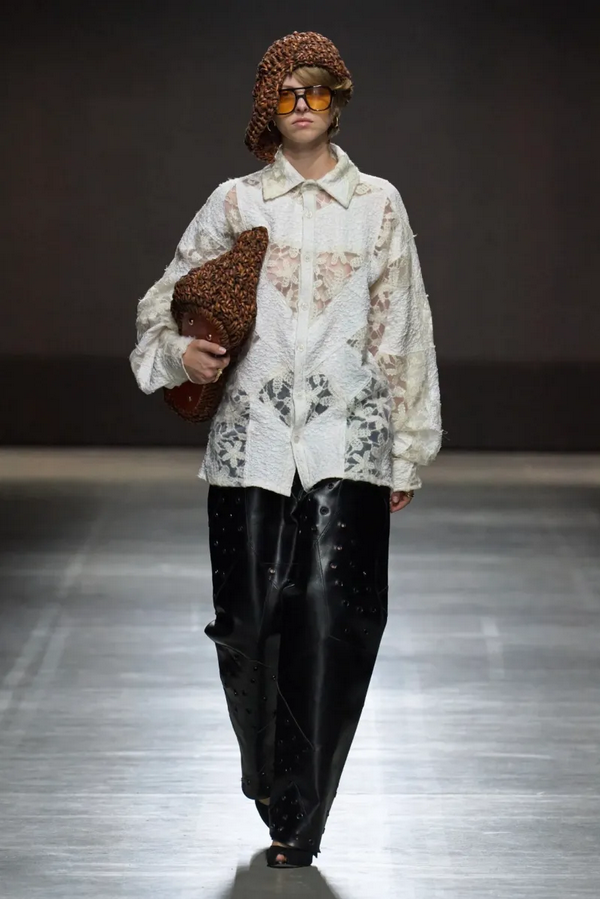
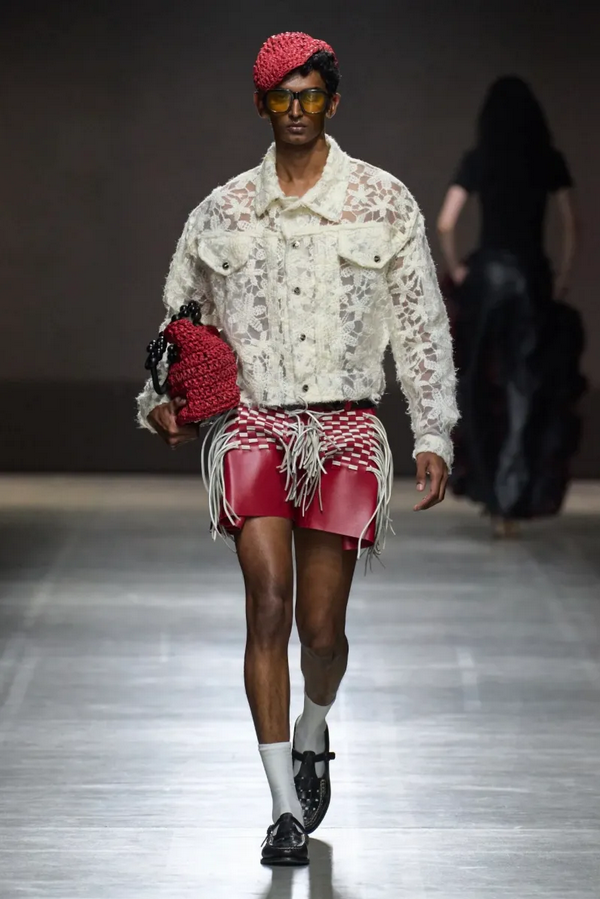
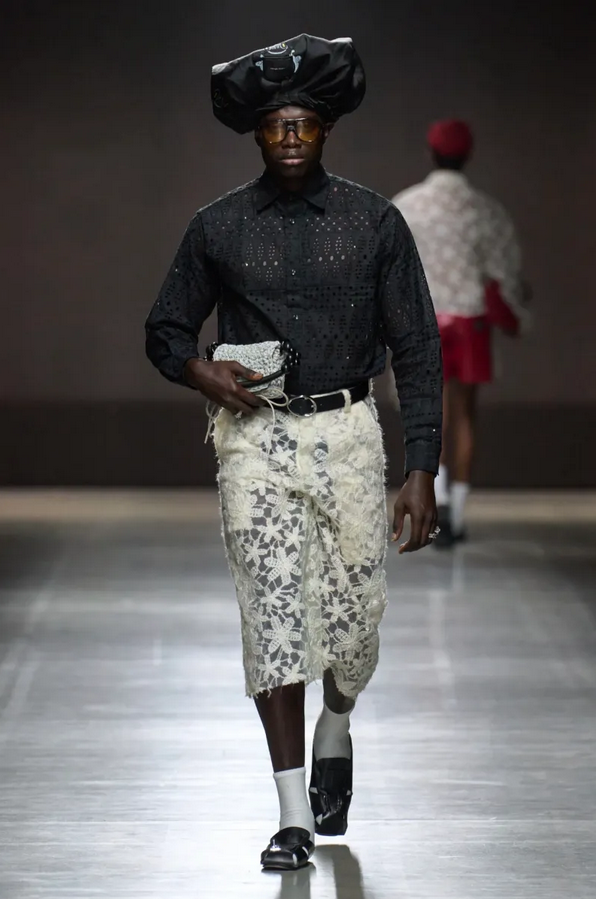
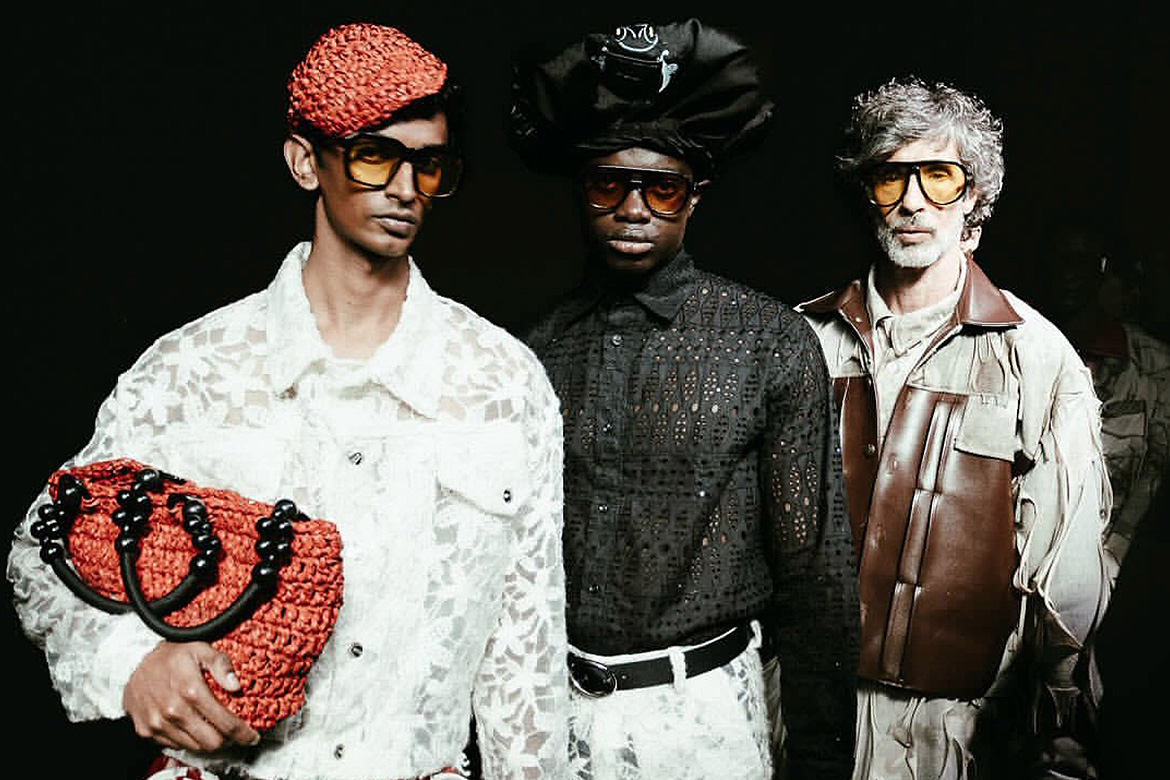
- Crochet, woven leather, beading as accessory and overlay details — adding handmade artisan character to tailored looks.
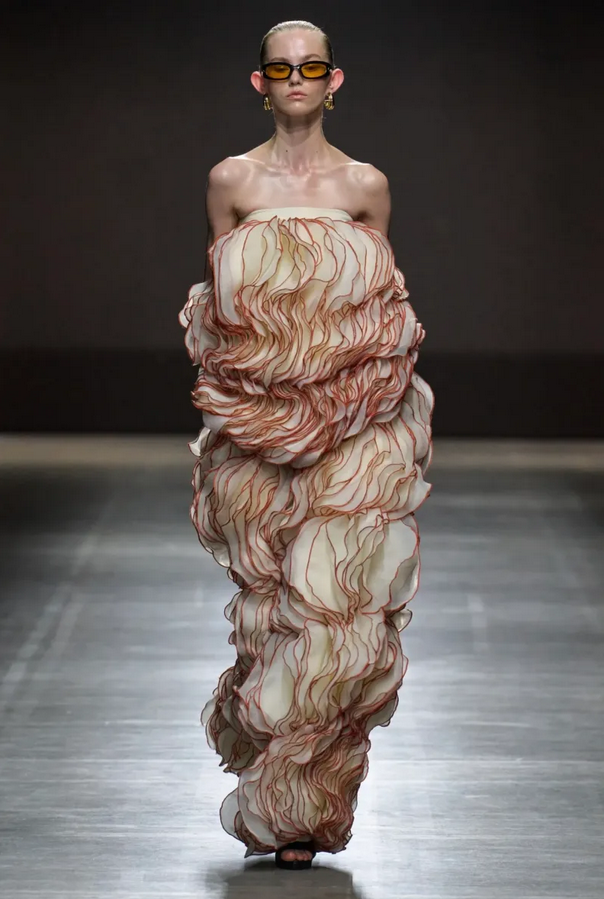
- Denim, lace, organza in patchworks and splice constructions.
These textural layers reinforce that the clothes are not sterile prototypes, but tactile objects infused with narrative and craft.
Key Silhouettes & Looks
Deconstructed Leather & Structural Juxtaposition
Some of the most striking outfits feature leather jackets or trousers that are deconstructed — panels cut, edges raw, partial re-weaves. One leather pant includes grommet openings intended to “swish” with movement.
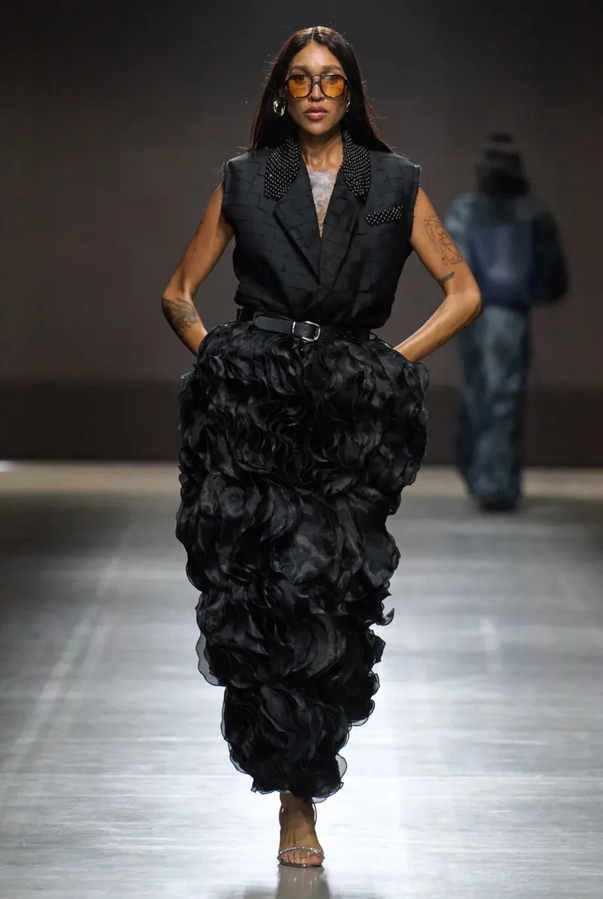
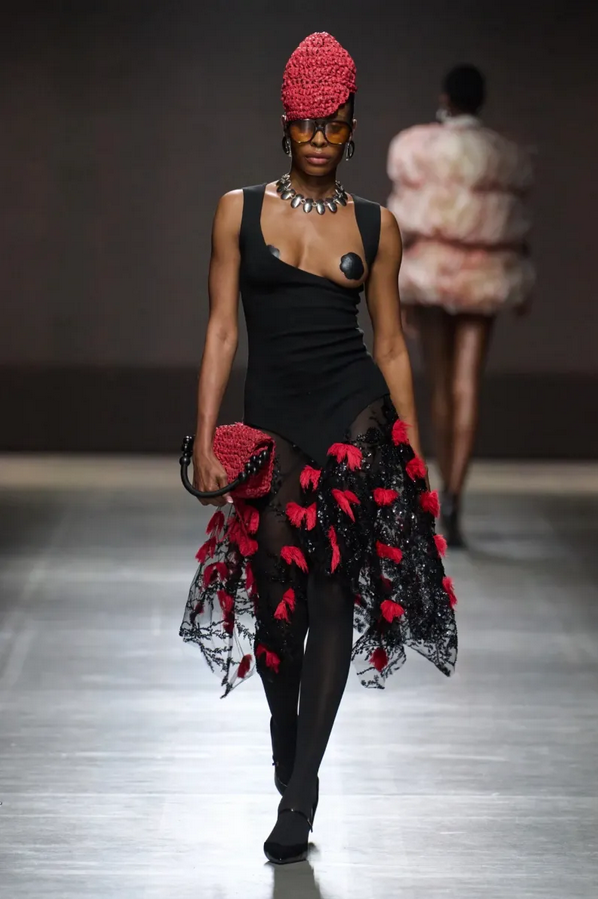
In several ensembles, James uses a leather girdle or corset overlay over sheer dresses, creating tension between exposure and structure.
Volume & Layering
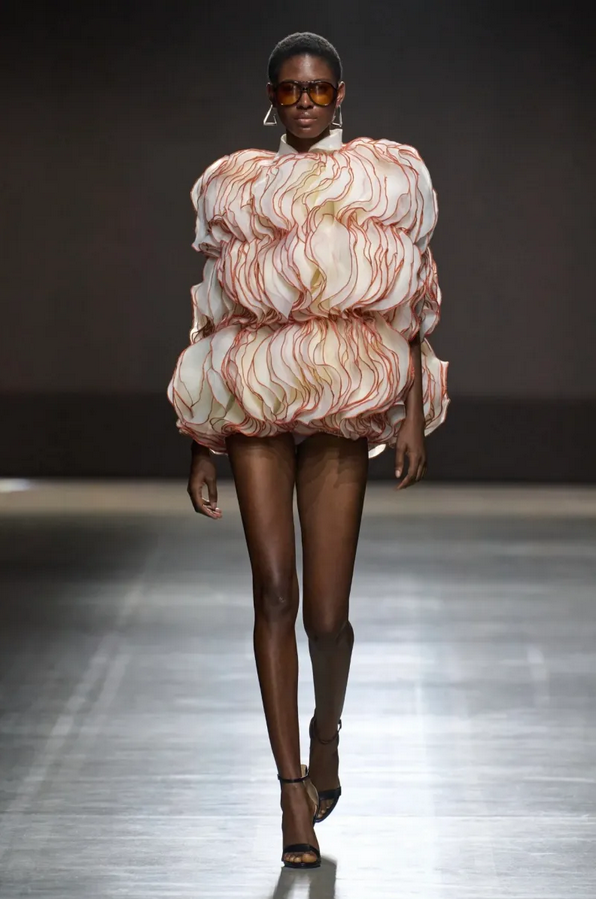
Ruffles and volume collide with sharp tailoring: oversized hems, cascading fabric, asymmetric cuts. The “Chaos” theme is literal in the way fabrics overlap, break and re-align.
Prints & Motifs
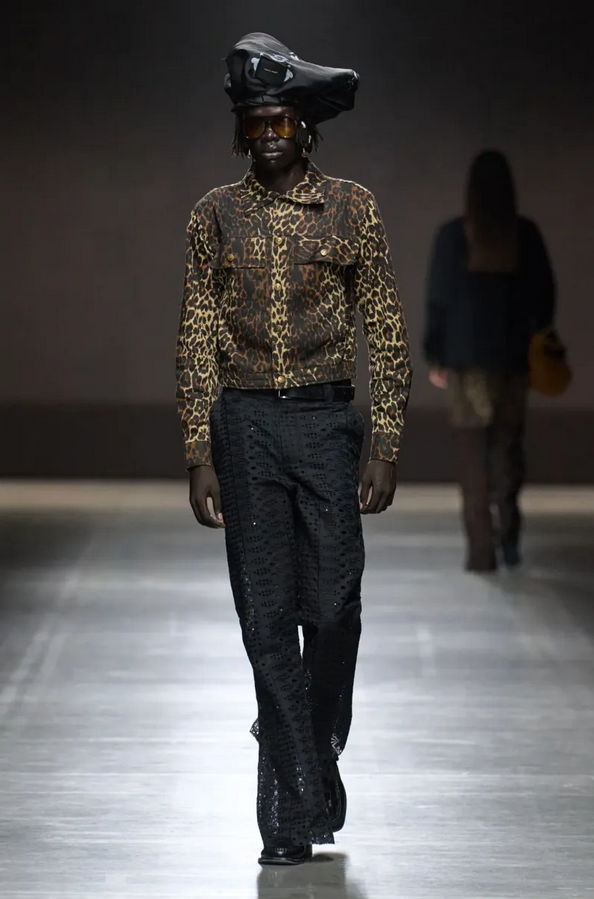
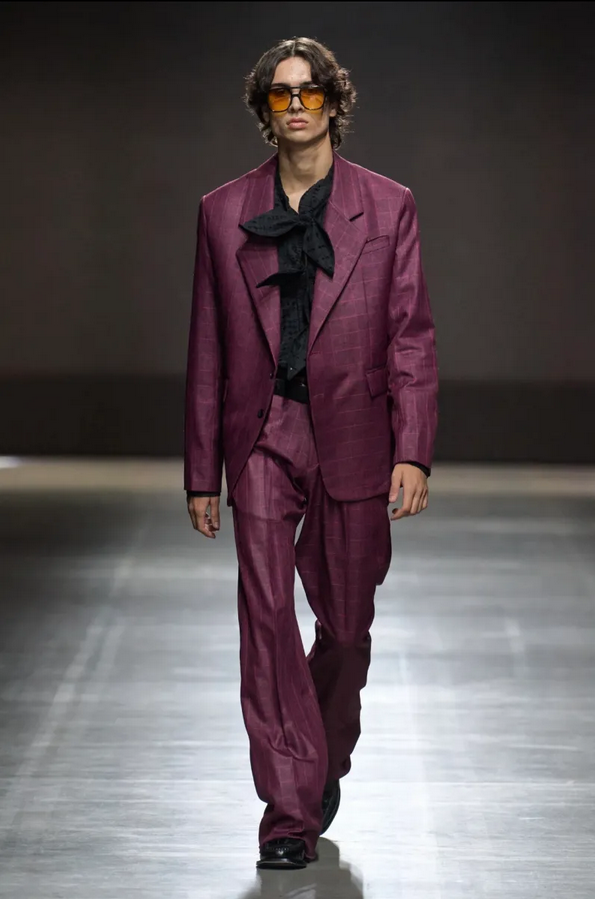
Leopard print, Nigerian lace, blanket-stripe wools, and printed organza appear as contrasts within the lineup. These add a cultural reference and visual punch against the more muted foundational tones.
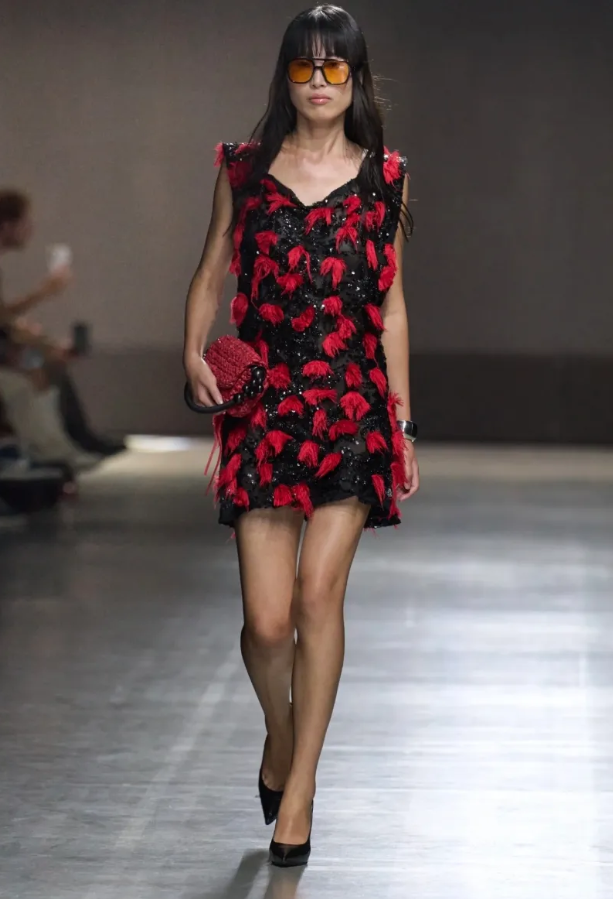
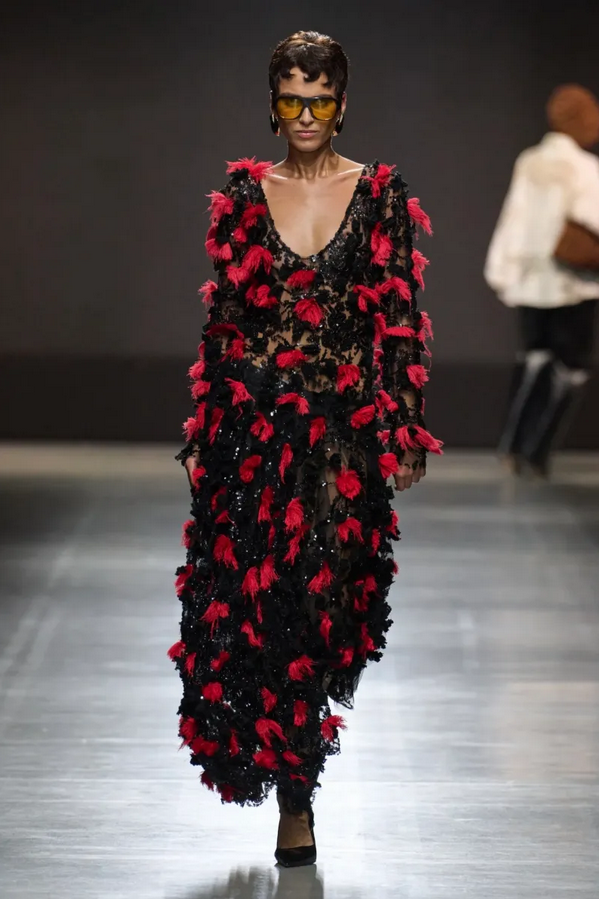
One standout look is a sheer black dress tufted with scarlet silk swatches and held together by a leather corset — sensual, fragmented, expressive.
Accessories & Movement
Accessories play a large role: crochet bags, oversized woven pieces, intricate beading, wood-beaded legs on pants — these are not afterthoughts but integrated parts of the garment experience.
James even designs sound into some pieces: beads or grommet openings that shift with the wear to “announce presence”. He says: “So they hear you when you’re coming to church.”
Strengths, Challenges & Brand Impact
Strengths
- A bold, coherent narrative: “Chaos” is not a vague term here, but a guiding principle visible in every detail.
- Craftsmanship and texture shine: the inclusion of handwoven, crochet, and deconstructed leather gives the collection depth.
- Cultural voice: the use of motifs referencing Nigeria, weave techniques, and print juxtaposition roots the work in identity.
- Wearability ambition: despite the theatricality, many looks feel like they could work in avant-garde wardrobes.
Challenges
- Some pieces may veer too theatrical for everyday uptake — balancing drama and functionality is always a tightrope.
- Structural complexity (corsets, frames, raw edges) might complicate movement or comfort.
- Strong visual contrasts may overshadow subtler pieces in commercial lines.
Brand Position & Reception
Critics and fashion insiders view SS26 as a milestone for Tokyo James — a moment where his voice becomes sharper, his aesthetic more resolved. His presence in Milan validates the crossover between African-inspired designers and high European fashion.
Vogue notes that Tokyo James is “making really interesting work of a provenance we don’t often see here in Milan” — a fresh, raw perspective in a field saturated by refinement.
Conclusion
Tokyo James’s SS26 “Chaos” collection at Milan Fashion Week is a powerful statement of disorder as design language. Every seam, tear, weave, and contrast is intentional — part of a voice that resists over-polish in favor of expressive, human rawness.
He pushes boundaries between structure and flow, heritage and disruption, craft and concept. In doing so, Tokyo James not only asserts his place in global fashion but amplifies a narrative where African-inspired, hand-driven design meets avant-garde vision.